
Our Red Planet Mars
Mars, often called the Red Planet, is the fourth planet from the Sun and one of the most studied bodies in our solar system.
Spotlight

Physics
Energy
Space

Computing

Astronauts

Nations
Mystery of Uranus
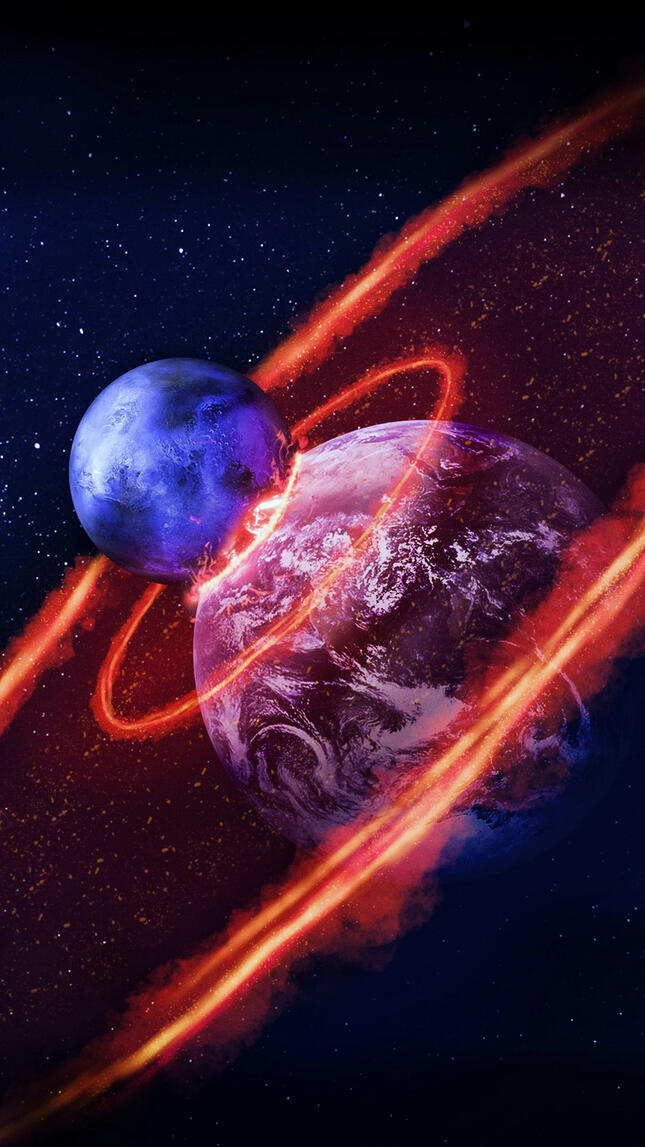
Uranus is an ice giant along with Neptune. Tipped on its side at an angle of 98°, it essentially rolls around the Sun.
Peacekeeping in an era of space race
As a charter, UCSNR works to maintain peace and stability among nations that are venturing into space.
More

FAQ
Impact

History

Founder

Motif

Opportunities
News


| Page |
|---|
| 1 |
Jayden Aveir Armenson launches United Charter for Space and Nuclear Research
Oct 25, 2025
A new chapter in space exploration begins today with the official launch of United Charter for Space and Nuclear Research (UCSNR), a charter dedicated to expanding access to space science, nuclear technology and exploration for people around the world.Founded by Jayden Aveir Armenson and a coalition of leaders from various countries, UCSNR’s mission is to democratize space exploration through funded research, educational programs and global partnerships. The organization seeks to inspire the next generation of explorers by promoting equity, sustainability and collaboration in space-related fields.As competition in space accelerates, the new foundation is stepping forward to promote unity rather than rivalry. UCSNR’s founding mission is clear: to ensure that space remains a domain of peace, discovery and shared progress, not conflict or exploitation. By fostering international collaboration, open research and dialogue between emerging and established space powers, the organization seeks to build a framework where exploration serves all of humanity.Its central vision aligns with the principles of the Outer Space Treaty of 1967, reaffirming that space “shall be the province of all humankind.” But UCSNR goes further, advocating for active peacekeeping measures in modern space relations, especially as private industry and new nations enter the arena.UCSNR invites the public, educators, policymakers and researchers to join its mission of promoting peace and cooperation in space. Whether through education, advocacy or international collaboration, every individual has a role to play in shaping the future of humanity beyond Earth.
Peacekeeping in the world
Oct 26, 2025
With the rapid growth of satellites, lunar missions and private space ventures, orbital traffic and resource competition are becoming pressing challenges. UNSCR focuses on preventing disputes before they arise, encouraging open communication and creating international frameworks for shared decision-making.UNSCR’s initiative emphasizes multilateral cooperation between governments, private companies and international agencies. It also aligns itself with the principles of the Outer Space Treaty, reaffirming that outer space should be used for peaceful purposes and benefit all humanity.The coalition has begun consultations with space agencies from multiple countries, industry leaders and research organizations to establish protocols for conflict resolution, debris management and responsible resource use."UCSNR is committed to ensuring that space remains a shared frontier where diplomacy, transparency and mutual respect guide every mission.”, Jayden Aveir Armenson has said.
About
Founded on the belief that discovery drives progress, UCSNR stands at the intersection of science, technology and human aspiration. The United Charter for Space and Nuclear Research is a charter among nations in Europe, the USA, the UK, Australia, Canada and New Zealand. From launching satellites that empower global communication to sending missions deep into the solar system, our journey is fueled by the same spirit of exploration that has defined humanity for millennia.As we look to the stars, we remain guided by a simple truth: every discovery begins with a question. Why do we explore? Because exploration is the essence of humanity. It pushes us to understand, to innovate and to grow.We are preparing for sustained human presence beyond Earth, with missions designed to establish a lasting foothold on the Moon and eventually send humans to Mars. Through cutting-edge propulsion systems, reusable launch vehicles and autonomous exploration technologies, we are paving the way for a new generation of explorers to journey farther than ever before.Closer to home, we are committed to deepening our understanding of Earth’s changing climate, ensuring that space-based science informs sustainable solutions for the challenges our planet faces. We are also investing in partnerships with commercial innovators, recognizing that the future of space is one of shared responsibility and opportunity.Our mission is clear: to explore space, advance scientific understanding and inspire future generations. We pursue this goal through pioneering missions that probe the origins of our universe, the evolution of our planet, and the possibilities of life beyond Earth. By pushing the boundaries of what is possible, we aim not only to uncover the mysteries of space but also to improve life here at home.
Governance
At UCSNR, strong governance and visionary leadership are the foundation of our mission to explore, innovate and inspire. Our governance framework ensures accountability, transparency and strategic alignment across every aspect of our work, from pioneering scientific research to managing complex international partnerships.Through collaborative leadership, ethical oversight and a shared commitment to excellence, we strive to ensure that every mission we undertake reflects our values and serves the collective interests of humanity.
Explore

Universe

Solar System

Earth

Science

Technology

Humans



Physics

Energy

Space

Computing

Astronauts

Nations





FAQ

Impact

History

Founder

Motif

Opportunities





Mars
Mars, the fourth planet from the Sun, has captivated human imagination for millennia. Named after the Roman god of war due to its distinctive blood-red appearance in the night sky, Mars represents both a window into our planetary past and a potential destination for humanity's future. This enigmatic world, sitting approximately 225 million kilometers from the Sun on average, continues to reveal its secrets through decades of exploration, fundamentally changing our understanding of planetary science and the possibilities for life beyond Earth.Mars is roughly half the size of Earth, with a diameter of about 6,779 kilometers. Despite its smaller stature, the Red Planet boasts some of the solar system's most impressive geological features. The planet's surface area is approximately equal to the land area of Earth, providing a vast terrain for exploration. Mars possesses a thin atmosphere composed primarily of carbon dioxide (about 95%), with trace amounts of nitrogen and argon. This tenuous atmosphere is only about 1% as dense as Earth's, making it insufficient to retain heat or protect the surface from radiation.The planet's iconic red color stems from iron oxide, commonly known as rust, which covers much of its surface. Temperatures on Mars are considerably colder than Earth, ranging from a relatively balmy 20 degrees Celsius near the equator during summer days to a bone-chilling minus 125 degrees Celsius at the poles during winter. A Martian day, called a "sol," lasts approximately 24 hours and 37 minutes, remarkably similar to Earth's rotation period. However, a Martian year extends for 687 Earth days due to its greater orbital distance from the Sun.Mars hosts some of the most spectacular geological formations in our solar system. Olympus Mons, the largest known volcano in the solar system, towers 21 kilometers above the surrounding plains—nearly three times the height of Mount Everest. This massive shield volcano spans roughly 600 kilometers across its base, an area comparable to the size of Arizona. The planet also features Valles Marineris, a canyon system stretching over 4,000 kilometers long and reaching depths of up to 7 kilometers. This immense scar across Mars's face dwarfs Earth's Grand Canyon, extending roughly the distance from New York to Los Angeles if placed on our planet.The Martian surface tells a story of dramatic geological activity in the planet's past. Ancient river valleys, outflow channels, and deltas provide compelling evidence that liquid water once flowed abundantly across its surface. Scientists believe that billions of years ago, Mars may have possessed a thicker atmosphere and warmer climate, potentially harboring lakes, rivers, or even oceans. This ancient water history makes Mars a prime candidate in the search for past or present microbial life.Humanity's fascination with Mars has driven an ambitious program of robotic exploration since the 1960s. Early missions like NASA's Mariner spacecraft provided our first close-up glimpses of the Martian surface. The Viking landers of 1976 were the first spacecraft to successfully operate on the surface, conducting experiments to search for signs of life, though results proved inconclusive. More recently, a fleet of sophisticated rovers—including Spirit, Opportunity, Curiosity, and Perseverance—has explored the planet's surface, analyzing rocks, studying atmospheric conditions, and searching for signs of ancient habitability.These missions have revolutionized our understanding of Mars. Curiosity rover confirmed that Mars once had conditions suitable for microbial life, discovering ancient lake beds and complex organic molecules. Perseverance, which landed in Jezero Crater in 2021, is actively collecting samples from what scientists believe was once a river delta, with plans to eventually return these specimens to Earth for detailed analysis. Meanwhile, orbiting spacecraft have mapped the planet in unprecedented detail, discovered subsurface water ice deposits, and monitored seasonal changes in the atmosphere.One of the most compelling questions driving Mars exploration is whether life ever existed—or still exists—on the Red Planet. While the surface today appears barren and inhospitable, substantial evidence suggests Mars once had conditions favorable for life. The discovery of recurring slope lineae, dark streaks that appear seasonally on Martian slopes, initially suggested the possibility of liquid brines on the surface today, though this interpretation remains debated. More significantly, radar observations have detected what appears to be liquid water beneath the planet's southern polar ice cap, raising tantalizing questions about potential subsurface habitats.Scientists have also found organic compounds and seasonal variations in atmospheric methane that could potentially indicate biological activity, though geological processes could also explain these observations. The search for definitive evidence of past or present Martian life remains one of science's greatest quests, with implications that would fundamentally reshape our understanding of biology's place in the universe.Mars represents the next frontier for human space exploration. NASA, SpaceX, and other international space agencies are actively developing technologies and strategies for eventual crewed missions to the Red Planet. The challenges are formidable: protecting astronauts from radiation during the months-long journey, producing life support resources from Martian materials, and ensuring safe return journeys all require breakthrough innovations. Nevertheless, many space agencies target the 2030s or 2040s for the first human missions to Mars.The ultimate goal extends beyond mere exploration—some envision establishing permanent human settlements on Mars, transforming humanity into a multi-planetary species. Such ambitions would require terraforming concepts or sophisticated life-support habitats, representing engineering challenges unprecedented in human history.
Uranus
Uranus stands as one of the solar system's most peculiar and enigmatic worlds. The seventh planet from the Sun, this distant ice giant rolls through space on its side, presents a deceptively calm appearance that belies its turbulent atmospheric dynamics, and remains one of the least explored planets in our cosmic neighborhood. Named after the ancient Greek deity of the sky, Uranus challenges our understanding of planetary formation and evolution while reminding us how much remains to be discovered in our own solar system.Uranus holds the distinction of being the first planet discovered in the modern era. On March 13, 1781, British astronomer William Herschel spotted what he initially believed to be a comet through his telescope. After months of observation and calculation by the astronomical community, scientists confirmed that Herschel had discovered a new planet, doubling the known radius of the solar system overnight. This discovery revolutionized astronomy, demonstrating that the solar system contained worlds beyond those known to ancient civilizations.Despite being technically visible to the naked eye under dark skies, Uranus appears as merely a faint star-like point of light, which explains why it eluded discovery for millennia. Even through modern telescopes, the planet presents a featureless, pale cyan disk, showing little of the dramatic cloud bands visible on Jupiter and Saturn. This apparent blandness conceals a world of extraordinary complexity and has made detailed study challenging without close spacecraft encounters.Uranus orbits the Sun at an average distance of approximately 2.9 billion kilometers, requiring roughly 84 Earth years to complete a single orbit. The planet's immense size dwarfs Earth, with a diameter of about 50,700 kilometers—roughly four times that of our home planet. Despite this impressive size, Uranus could fit inside Jupiter more than 20 times over, making it the third-largest planet in our solar system.The planet's mass is approximately 14.5 times that of Earth, composed primarily of water, methane, and ammonia ices surrounding a rocky core. This composition distinguishes Uranus and its sibling Neptune as "ice giants" rather than "gas giants" like Jupiter and Saturn, which consist predominantly of hydrogen and helium. The methane in Uranus's upper atmosphere absorbs red light while reflecting blue and green wavelengths, giving the planet its distinctive cyan coloration.Temperatures in Uranus's upper atmosphere plummet to around minus 224 degrees Celsius, making it one of the coldest planetary atmospheres in the solar system—surprisingly, even colder than the more distant Neptune. A day on Uranus lasts approximately 17 hours and 14 minutes, though measuring rotation proves complicated by the planet's unusual orientation and the absence of a solid surface.Uranus's most extraordinary feature is its axial tilt. While most planets spin like tops at slight angles to their orbital planes, Uranus rotates at an extreme 98-degree tilt, essentially rolling through space on its side. This dramatic orientation means that each pole experiences 42 years of continuous sunlight followed by 42 years of complete darkness during the planet's 84-year orbital period. The cause of this unusual tilt remains debated, though most scientists hypothesize that one or more massive collisions during the solar system's early history knocked Uranus onto its side.This extreme tilt creates bizarre seasonal patterns unlike anything else in the solar system. During solstices, one pole points almost directly at the Sun while the other faces the darkness of space. During equinoxes, the Sun appears to rise and set around the planet's equator. These unusual dynamics drive complex atmospheric circulation patterns and seasonal changes that scientists are only beginning to understand.For decades, Uranus's apparent atmospheric calm puzzled planetary scientists. The Voyager 2 flyby in 1986 revealed few distinct features, leading some to describe it as the most boring planet. However, as Uranus progressed through its orbit and modern telescopes improved, astronomers discovered that the planet hosts surprisingly dynamic weather systems. Massive storms larger than continents appear and disappear, wind speeds exceed 900 kilometers per hour, and distinct cloud bands become visible during certain seasons.The atmosphere consists of approximately 83% hydrogen, 15% helium, and 2% methane, with trace amounts of other hydrocarbons. Unlike Jupiter and Saturn, Uranus emits very little excess heat—it radiates roughly the same amount of energy it receives from the Sun. This peculiarity may relate to its sideways orientation or suggest unusual internal dynamics, and it helps explain why the planet's atmosphere appeared so calm during earlier observations.Recent studies have revealed that Uranus experiences dramatic seasonal atmospheric changes. As different portions of the planet receive sunlight, vast circulation cells develop, transporting heat and creating weather systems. These observations suggest that our earlier view of Uranus as meteorologically inactive was simply a matter of observing at the wrong time in its long seasonal cycle.Like all giant planets, Uranus possesses a ring system, though its rings remained undiscovered until 1977. The planet has 13 known rings, considerably darker and narrower than Saturn's spectacular bands. Composed primarily of dark particles possibly containing organic compounds, these rings may represent the shattered remains of former moons destroyed by impacts or tidal forces.Uranus hosts at least 27 known moons, uniquely named after characters from the works of William Shakespeare and Alexander Pope rather than figures from classical mythology. The five major moons—Miranda, Ariel, Umbriel, Titania, and Oberon—present diverse and intriguing geology. Miranda, in particular, displays some of the most bizarre terrain in the solar system, featuring massive cliffs, jumbled surface regions, and evidence of past geological activity that seems impossible for such a small, cold world. Scientists theorize that Miranda may have been shattered by an impact and reassembled under its own gravity.Uranus possesses a magnetic field unlike any other planet's. Rather than aligning roughly with the planet's rotation axis as expected, the magnetic field tilts at a 59-degree angle to the rotational axis and is offset from the planet's center. This bizarre configuration creates an asymmetric magnetosphere that tumbles chaotically as the planet rotates. Scientists suspect this unusual magnetic field may result from its generation in a slushy, electrically conductive ice layer rather than a metallic core, though many questions remain unanswered.Voyager 2 remains the only spacecraft to visit Uranus, providing our sole close-up glimpse during its brief 1986 encounter. The planetary science community has identified Uranus as a high-priority target for future exploration, with proposals for dedicated orbiter missions that could unlock the ice giant's secrets. Such a mission would revolutionize our understanding of this enigmatic world, revealing the dynamics of its atmosphere, studying its moons and rings in detail, and investigating the mysteries of its magnetic field and interior structure.